


kategória
szerző
cím
sorozat
betöltés...
kiadó
betöltés...
ISBN
évszám
ár
-
leírás
Előrendelhető
A mezők bármelyike illeszkedjen
A mezők mind illeszkedjen


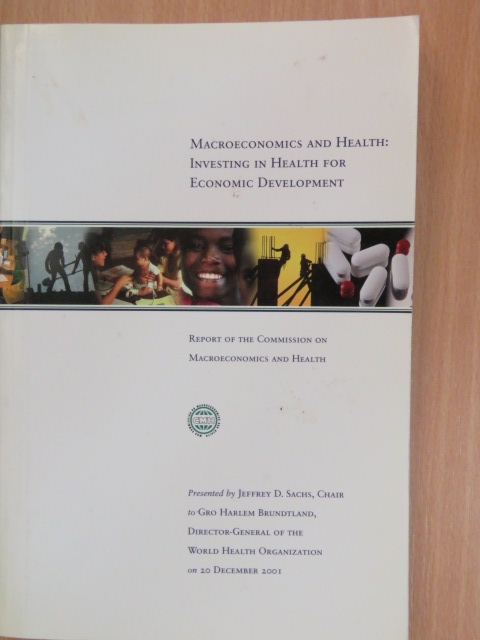
Macroeconomics and Health: Investing in Health for Economic Development [antikvár]
World Health Organization
,
Megjelenés: 2001. január 01.

The Commission on Macroeconomics and Health (CMH) was establishedby World Health Organization Director-General Gro Harlem Brundtlandin January 2000 to assess the place of health in global economic develop-ment. Although health is widely understood to be both a central goal andan important outcome of development, the importance of investing inhealth to promote economic development and poverty reduction has beenmuch less appreciated. We have found that extending the coverage of cru-cial health services, including a relatively small number of...
online ár:
Webáruházunkban a termékek mellett feltüntetett fekete színű online ár csak internetes megrendelés esetén érvényes.
4480 Ft

Részletesen erről a termékről
Bővebb ismertető
The Commission on Macroeconomics and Health (CMH) was establishedby World Health Organization Director-General Gro Harlem Brundtlandin January 2000 to assess the place of health in global economic develop-ment. Although health is widely understood to be both a central goal andan important outcome of development, the importance of investing inhealth to promote economic development and poverty reduction has beenmuch less appreciated. We have found that extending the coverage of cru-cial health services, including a relatively small number of specific inter-ventions, to the world's poor could save millions of lives each year, reducepoverty, spur economic development, and promote global security.This report offers a new strategy for investing in health for econom-ic development, especially in the world's poorest countries, based upon anew global partnership of the developing and developed countries. Timelyand bold action could save at least 8 million lives each year by the end ofthis decade, extending the life spans, productivity and economic well-being of the poor. Such an effort would require two important initiatives:a significant scaling up of the resources currently spent in the health sec-tor by poor countries and donors alike; and tackling the non-financialobstacles that have limited the capacity of poor countries to deliver healthservices. We believe that the additional investments in healthrequiringof donors roughly one-tenth of one percent of their national incomewould be repaid many times over in millions of lives saved each year,enhanced economic development, and strengthened global security.Indeed, without such a concerted effort, the world's commitments toimproving the lives of the poor embodied in the Millennium DevelopmentGoals (MDGs) cannot be met.In many respects, the magnitude of the scaled-up effort reflects theextremely low levels of income in the countries concerned, the resultingpaltry current levels of spending on health in those countries, and the costsrequired for even a minimally adequate level of spending on health.
Termékadatok
Cím: Macroeconomics and Health: Investing in Health for Economic Development [antikvár]
Kiadó: World Health Organization
Megjelenés: 2001. január 01.
Kötés: Ragasztott papírkötés
ISBN: 924154550X
Méret: 150 mm x 230 mm
Új vásárló vagyok!
új vásárlóval indíthatsz rendelést............