


kategória
szerző
cím
sorozat
betöltés...
kiadó
betöltés...
ISBN
évszám
ár
-
leírás
Előrendelhető
A mezők bármelyike illeszkedjen
A mezők mind illeszkedjen


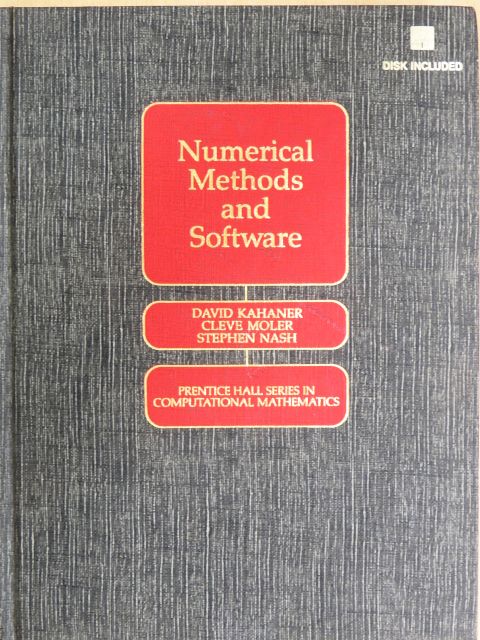
Numerical Methods and Software [antikvár]
Cleve Moler, David Kahaner, Stephen Nash

/
Introduction
.1 WHY A NEW BOOK?
Computers are changing rapidly. The mainframe computer with its traditional one scalar operation at a time is giving way to a plethora of different architectures. Vector computers such as the Cray 1, CDC Cyber 205, or ETA 10 can now manipulate arrays, take dot products, and do several operations in parallel with a single machine instruction. Multiprocessors provide up to a few thousand highly connected computers that can work more or less independently on different aspects of a single problem. Many...
online ár:
Webáruházunkban a termékek mellett feltüntetett fekete színű online ár csak internetes megrendelés esetén érvényes.
3980 Ft

Részletesen erről a termékről
Bővebb ismertető
/
Introduction
.1 WHY A NEW BOOK?
Computers are changing rapidly. The mainframe computer with its traditional one scalar operation at a time is giving way to a plethora of different architectures. Vector computers such as the Cray 1, CDC Cyber 205, or ETA 10 can now manipulate arrays, take dot products, and do several operations in parallel with a single machine instruction. Multiprocessors provide up to a few thousand highly connected computers that can work more or less independently on different aspects of a single problem. Many researchers are trying to take advantage of these new computer architectures.
The way scientists and engineers communicate with computers is changing too. The slow link between user and remote computer is being replaced by the personal computer or workstation with its high data transmission rate. This in turn is fueling the development of highly interactive and graphically oriented applications requiring little programming effort.
Together with these developments better numerical methods are also appearing. Because of the rapid changes there is a gap between the computational techniques taught in physics, chemistry, and engineering courses and the software that will confront a practising scientist. What is needed is a text in tune with current numerical methods that recognizes the new developments in hardware and communications, but still suitable as a first course. This book fills this role. We give four simple examples. If the terms used below are unfamiliar be assured that they will be explained in the subsequent chapters.
(1) "Splines" are often recommended for fitting a smooth curve through accurate data, but the best current software uses "Hermite cubics." For interactive design, such
1
Termékadatok
Cím: Numerical Methods and Software [antikvár]
Kiadó: Prentice Hall
Kötés: Vászon
ISBN: 0136272584
Méret: 190 mm x 240 mm
Új vásárló vagyok!
új vásárlóval indíthatsz rendelést............