


kategória
szerző
cím
sorozat
betöltés...
kiadó
betöltés...
ISBN
évszám
ár
-
leírás
Előrendelhető
A mezők bármelyike illeszkedjen
A mezők mind illeszkedjen



AUTHOR'S NOTE
The Yanomama Indians, also known in anthropological lit-erature as the Waika, Shamatari, Barafiri, Shirishana, and Guaharibo, inhabit the most isolated portion of the border between southern Venezuela and northern Brazil. It has been roughly estimated that there are between ten and twenty thousand of them, occupying an area of approximately seven thousand square miles. This territory encompasses the headwaters of the Orinoco, Mavaca, Siapo, Ocamo, Padamo, and Ventuari rivers in Venezuela, and the Uraricoera, Catrimani, Dimini,...
online ár:
Webáruházunkban a termékek mellett feltüntetett fekete színű online ár csak internetes megrendelés esetén érvényes.
5540 Ft

Részletesen erről a termékről
Bővebb ismertető
AUTHOR'S NOTE
The Yanomama Indians, also known in anthropological lit-erature as the Waika, Shamatari, Barafiri, Shirishana, and Guaharibo, inhabit the most isolated portion of the border between southern Venezuela and northern Brazil. It has been roughly estimated that there are between ten and twenty thousand of them, occupying an area of approximately seven thousand square miles. This territory encompasses the headwaters of the Orinoco, Mavaca, Siapo, Ocamo, Padamo, and Ventuari rivers in Venezuela, and the Uraricoera, Catrimani, Dimini, and Ara^a rivers in Brazil.
The Yanomama live in hamlets of palm-thatched dwellings called shabonos, which are scattered throughout the forest. The number of individuals residing in each of these widely dispersed hamlets varies between sixty and a hundred people. Some of the shabonos are located close to Catholic or Protestant missions or in other areas accessible to the white man; others have withdrawn deeper into the jungle. Hamlets still exist in remote parts of the forest that have not been contacted by outsiders.
My experience with the Iticoteri, the inhabitants of one of these unknown shabonos, is what this book is about. It is a subjective account of the surplus data, so to speak, of anthropological field research I conducted on curing practices in Venezuela.
The most important part of my training as an anthropologist emphasized the fact that objectivity is what gives
Termékadatok
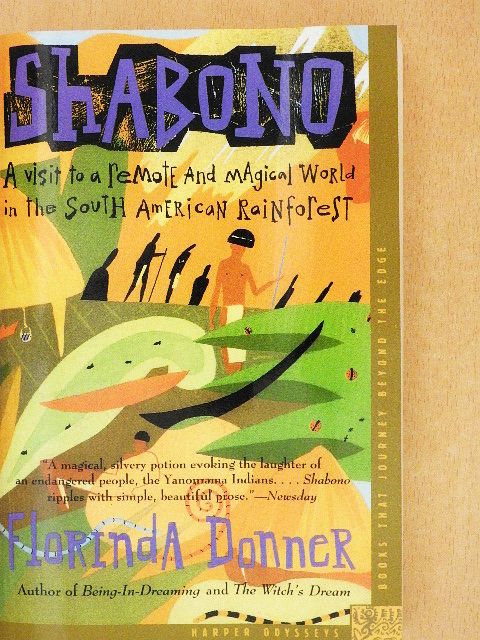
Cím: Shabono [antikvár]
Szerző:
Florinda Donner
Kiadó: HarperSanFrancisco
Kötés: Ragasztott papírkötés
ISBN: 0062502425
Méret: 130 mm x 200 mm
Új vásárló vagyok!
új vásárlóval indíthatsz rendelést............