


kategória
szerző
cím
sorozat
betöltés...
kiadó
betöltés...
ISBN
évszám
ár
-
leírás
Előrendelhető
A mezők bármelyike illeszkedjen
A mezők mind illeszkedjen


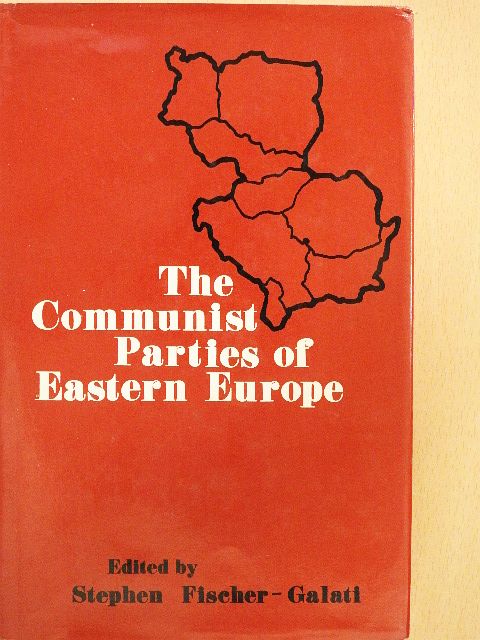
The Communist Parties of Eastern Europe [antikvár]
L. A. D. Dellin, Peter A. Toma, Peter R. Prifti

Stephen Fischer-Galati
Introduction
Today, some thirty-five years since the "liberation" of Eastern Europe by the Soviet Union, the Communist parties have consolidated their power. Their raison d'etre and legitimacy, however, remain rooted in the military power of the USSR. None, not even the League of Communists of Yugoslavia, can relax its vigilance tow ard internal and external enemies bent on or favoring the overthrow ing of the ruling cliques. The "enemies" are easily identifiable. Theoretically, they comprise the Western imperialists...
online ár:
Webáruházunkban a termékek mellett feltüntetett fekete színű online ár csak internetes megrendelés esetén érvényes.
7800 Ft

Részletesen erről a termékről
Bővebb ismertető
Stephen Fischer-Galati
Introduction
Today, some thirty-five years since the "liberation" of Eastern Europe by the Soviet Union, the Communist parties have consolidated their power. Their raison d'etre and legitimacy, however, remain rooted in the military power of the USSR. None, not even the League of Communists of Yugoslavia, can relax its vigilance tow ard internal and external enemies bent on or favoring the overthrow ing of the ruling cliques. The "enemies" are easily identifiable. Theoretically, they comprise the Western imperialists headed by the United States, the practitioners of apartheid, the Zionists, all internal opponents to Communist rule and, at least in the case of Albania, also the "revisionists" in the Kremlin. In practice, the only enemies are the vast majority of the peoples of Eastern Europe and the men in the Kremlin who have the ultimate power over the very survival of the Communist leaders of these countries.
Given these "objective conditions," the Communist parties of Eastern Europe are severely limited in their exercise of p()v\ er. It is true that over the years certain variations in the character of Communist rule have been recorded throughout the region. But, with the possible exception of Yugoslavia, there have been no true national roads to communism. Accommodations to specific historic and political circumstances have always been a function of relations between the leaders of the Communist parties of Eastern Europe and the Kremlin. The.se are the paramount factors which must be understood in any study of the Communist parties of Eastern Europe. The differences recorded in the ensuing essays are, as the authors indicate, illustrative of specific national and international considerations conditioned by the political dynamics of the intrinsically static and rigid Soviet system.
Termékadatok
Cím: The Communist Parties of Eastern Europe [antikvár]
Kiadó: Columbia University Press
Kötés: Vászon
ISBN: 0231035918
Méret: 150 mm x 220 mm
Új vásárló vagyok!
új vásárlóval indíthatsz rendelést............