


kategória
szerző
cím
sorozat
betöltés...
kiadó
betöltés...
ISBN
évszám
ár
-
leírás
Előrendelhető
A mezők bármelyike illeszkedjen
A mezők mind illeszkedjen


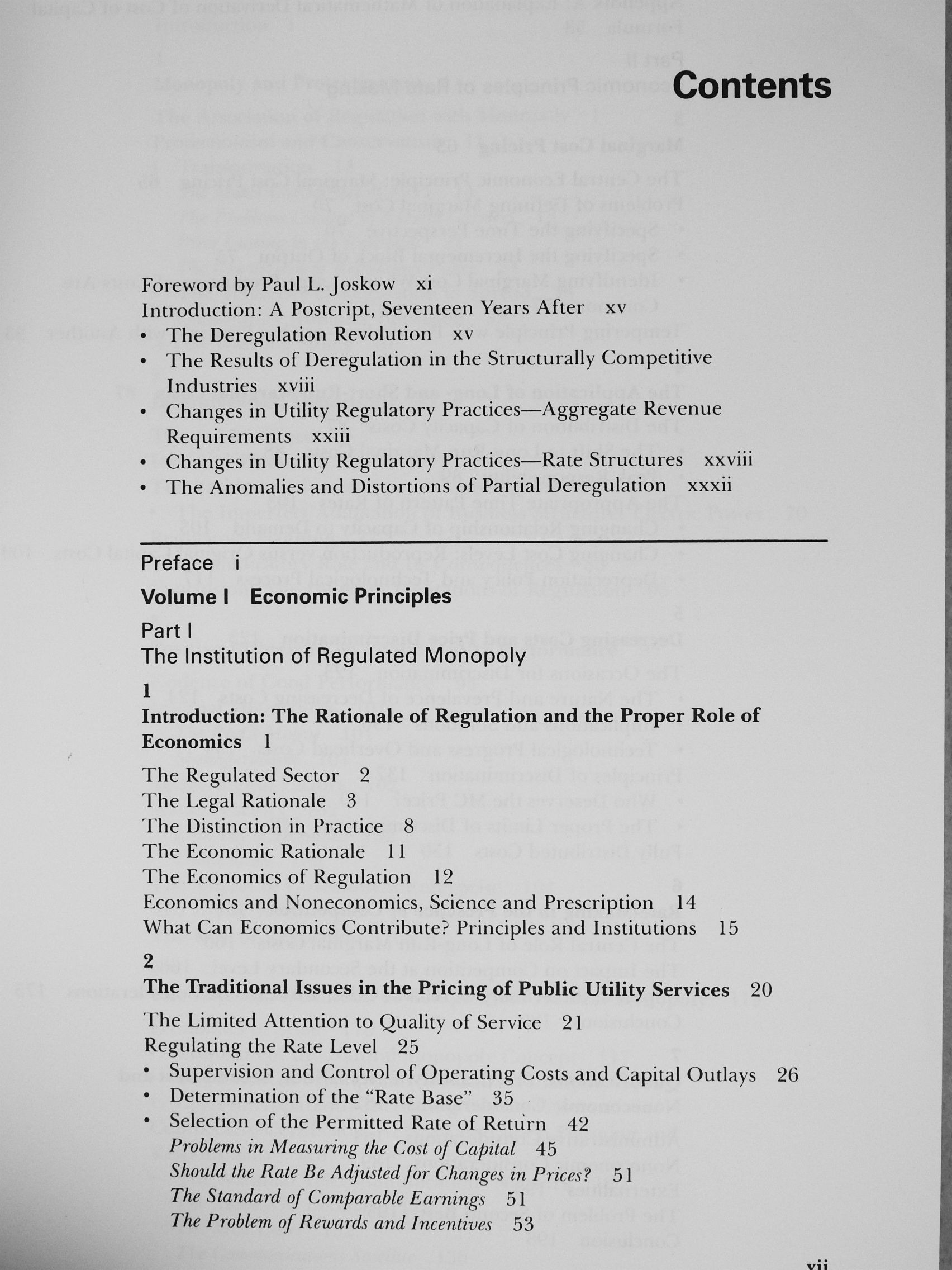

Foreword Paul L Joskow
I am pleased that The MIT Press has decided to reprint Alfred Kahn s The Economics of Regulation: Principles and !nstitutiom. Not only is this two-volume treatise a classic in the literature on the economics of regulation, but a great deal of the analysis that it contains continues to be of contemporary interest from both an intellectual and a public policy perspective. The seventeen years that have passed since the publication of these volumes have witnessed a renaissance of academic interest in the economics of...
online ár:
Webáruházunkban a termékek mellett feltüntetett fekete színű online ár csak internetes megrendelés esetén érvényes.
6400 Ft

Részletesen erről a termékről
Bővebb ismertető
Foreword Paul L Joskow
I am pleased that The MIT Press has decided to reprint Alfred Kahn s The Economics of Regulation: Principles and !nstitutiom. Not only is this two-volume treatise a classic in the literature on the economics of regulation, but a great deal of the analysis that it contains continues to be of contemporary interest from both an intellectual and a public policy perspective. The seventeen years that have passed since the publication of these volumes have witnessed a renaissance of academic interest in the economics of regulation. An enormous technical literature has accompanied this renaissance. Many changes in public policies toward regulated industries have taken place during this period of time as well. Nevertheless, it is still often the case that the most thoughtful and intuitive discussions of difficult contemporary regulatory problems are "in Kahn."
It is a special pleasure for me to have been given the opportunity to provide a brief foreword to these volumes. I took my first courses in the economics of regulation from Alfred Kahn when I was an undergraduate at Cornell at just about the time he began writing volume I. Many of my interests in economics are a direct result of the exciting ideas that were presented in those courses and that have been incorporated in these volumes. My career as a professional economist spans almost exactly the time period that has elapsed since their publication. As a co-editor and associate editor of the Bell Journal of Economics—now the Rand Journal of Economics—for almost ten years, I had an opportunity to have a first-hand view of the rapid growth of academic interest in the economics of regulation. As a professional economist I have seen the important impact that this book and its author have had on public policy. As a teacher, I have made extensive use of the book in both undergraduate and graduate courses and have been disappointed that it has been difficult to assign it since it has been out of print. There is a great deal of wisdom in these volumes and we should be grateful that students of economic regulation will now be able to gain access to them more easily.
The Economics of Regulation is divided into two volumes. The first focuses on "economic principles" and the second on "institutional issues." This division is somewhat artiilcial. Although volume I is devoted primarily to the development of the economic principles that should guide the economic reg-
Termékadatok
Cím: The Economics of Regulation I-II. [antikvár]
Szerző:
Alfred E. Kahn
Kiadó: The MIT Press
Kötés: Ragasztott papírkötés
ISBN: 0262610523
Méret: 170 mm x 250 mm
Új vásárló vagyok!
új vásárlóval indíthatsz rendelést............