


kategória
szerző
cím
sorozat
betöltés...
kiadó
betöltés...
ISBN
évszám
ár
-
leírás
Előrendelhető
A mezők bármelyike illeszkedjen
A mezők mind illeszkedjen


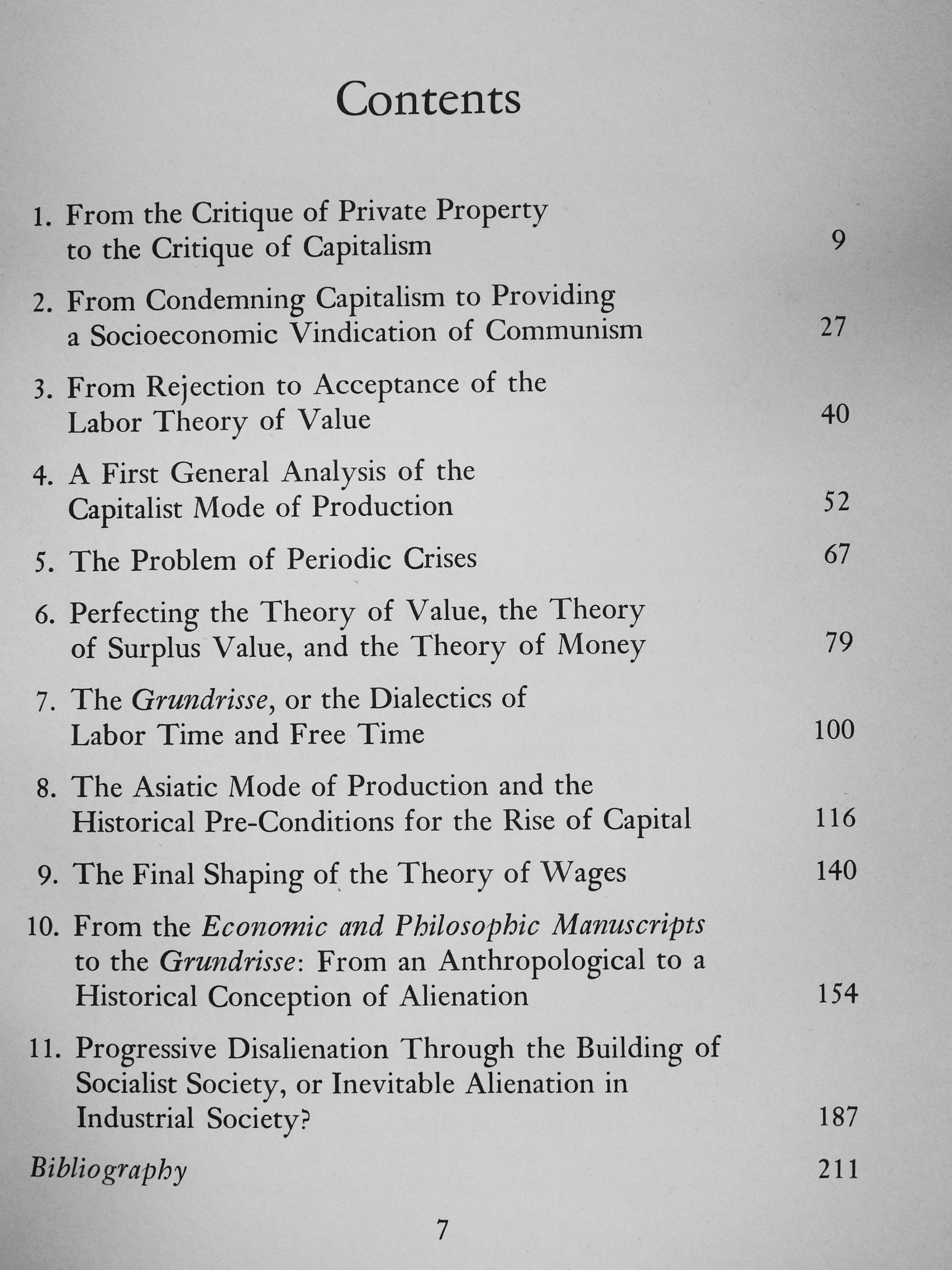
The Formation of the Economic Thought of Karl Marx [antikvár]
Ernest Mandel

From the Critique of Private Property to the Critique of CapitaHsm
Marx and Engels did not travel the same route to arrive at the ideas they came to share. "They had in common the same philosophical starting point, namely, Hegel's dialectics, [Bruno] Bauer's 'self-consciousness,' and Feuerbach's humanism; they then made the acquaintance of British and French socialism, but whereas this became for Marx the means whereby he ordered his thoughts regarding the struggles and aspirations of his epoch, for Engels the same role was played by...
online ár:
Webáruházunkban a termékek mellett feltüntetett fekete színű online ár csak internetes megrendelés esetén érvényes.
2840 Ft

Részletesen erről a termékről
Bővebb ismertető
From the Critique of Private Property to the Critique of CapitaHsm
Marx and Engels did not travel the same route to arrive at the ideas they came to share. "They had in common the same philosophical starting point, namely, Hegel's dialectics, [Bruno] Bauer's 'self-consciousness,' and Feuerbach's humanism; they then made the acquaintance of British and French socialism, but whereas this became for Marx the means whereby he ordered his thoughts regarding the struggles and aspirations of his epoch, for Engels the same role was played by British industry." ^
This difference resulted, no doubt, from differences in character and temperament—the more speculative nature of Marx's genius, the greater impetuousness of Engels'. Chance and material circumstances also played a part, however. While Marx emigrated from Germany to France, Engels was sent to England to learn the conduct of business affairs, and there came into contact with the reality of large-scale capitalist industry. It was the shock of this encounter with the contradictions of bourgeois society that was to decide the course of his thinking for the rest of his life.^
1. Franz Mehring, in Aus dem literarischen Nachlass von Karl Marx und Friedrich Engels, 1841-1850, Vol. I, p. 359.
2. "While in Manchester, it was tangibly brought home to me that the economic facts, which have so far played no role or only a contemptible one in the writing of history, are, at least in the modern world, a decisive historical force; that they form the basis for the origin of the present-day class antagonism; that these class antagonisms, in the countries where they have become fully developed, thanks to large-scale industry, hence especially in England, are in their turn the basis of the formation of political parties and of party struggles, and thus of all political history." (Frederick
Termékadatok
Cím: The Formation of the Economic Thought of Karl Marx [antikvár]
Szerző:
Ernest Mandel
Kiadó: Monthly Review Press
Kötés: Ragasztott papírkötés
Méret: 140 mm x 200 mm
Új vásárló vagyok!
új vásárlóval indíthatsz rendelést............