


kategória
szerző
cím
sorozat
betöltés...
kiadó
betöltés...
ISBN
évszám
ár
-
leírás
Előrendelhető
A mezők bármelyike illeszkedjen
A mezők mind illeszkedjen


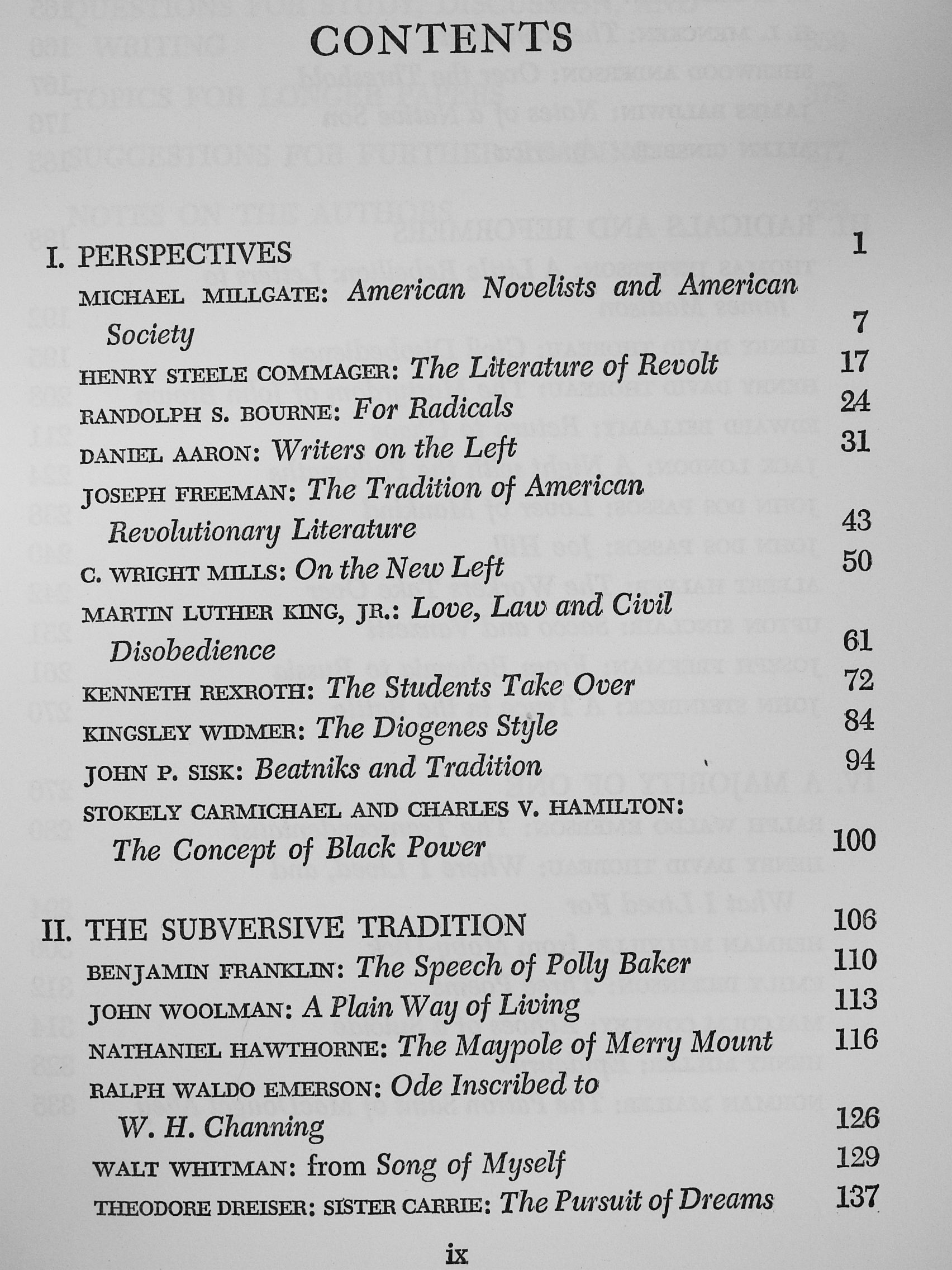
The Social Rebel in American Literature [antikvár]
Henry Steele Commager, Michael Millgate, Randolph S. Bourne

PREFACE
Although American society is noted for the high degree of conformity that it imposes on its members and for the materialistic values tliat seem often to take precedence over human ones, it is a significant fact that much of the serious literature of America has since its beginnings been one of criticism, dissent, rebellion—a double-sided mirror that reflects not only social practices but also the underlying ideals and aspirations of America. The theme of social rebellion is a fundamental one—perhaps the fundamental one—in...
online ár:
Webáruházunkban a termékek mellett feltüntetett fekete színű online ár csak internetes megrendelés esetén érvényes.
3980 Ft

Részletesen erről a termékről
Bővebb ismertető
PREFACE
Although American society is noted for the high degree of conformity that it imposes on its members and for the materialistic values tliat seem often to take precedence over human ones, it is a significant fact that much of the serious literature of America has since its beginnings been one of criticism, dissent, rebellion—a double-sided mirror that reflects not only social practices but also the underlying ideals and aspirations of America. The theme of social rebellion is a fundamental one—perhaps the fundamental one—in American literature. Tliis collection of comment on the role of the social rebel in American life and of literature reflecting the course and direction of his rebellion is designed primarily for use as a controlled-research casebook that will allow the student suflBcient material to formulate and to document his own conclusions about "the subversive tradition" in American literature.
In a volume of this size we could not hope to cover adequately the multifaceted body of literature of social rebellion. We have, therefore, emphasized the recmrent tendencies that seem to us the most significantly American ones—those reflecting the continuing moral revolution against the stringent restrictions of a puritan heritage, those stemming from the democratic faith in the individual and the belief in his inalienable rights, and those in opposition to the economic structure of American society. We have had to be satisfied merely to glance at literature of dissent that is less locally American— Utopian literature and the literature of bohemia, for example.
The volume contains two principal types of selections. The first section, "Perspectives," contains several authoritative assessments of or germinal statements about the literature of rebellion and the role of the rebel. These essays make generalizations and observations that can be supported—or argued—by the second type of selections, usually works of imaginative literature expressing important features of the theme of social rebellion. The organization of the three literary sections permits a chronological overview that suggests major lines
Termékadatok
Cím: The Social Rebel in American Literature [antikvár]
Kiadó: The Odyssey Press
Kötés: Ragasztott papírkötés
Méret: 140 mm x 210 mm
Új vásárló vagyok!
új vásárlóval indíthatsz rendelést............