


kategória
szerző
cím
sorozat
betöltés...
kiadó
betöltés...
ISBN
évszám
ár
-
leírás
Előrendelhető
A mezők bármelyike illeszkedjen
A mezők mind illeszkedjen



The Mont Pelée Volcano (1902)
It may not be good for the tourist trade to call some of the Lesser Antilles the Volcanic Caribees, but that is what they are. Stretching in an arc from the Virgin Islands in the north to Grenada in the south, the Windward and the Leeward Islands have been built up from the ocean floor by volcanic action. On some the volcanoes are extinct, on others, still active. Only two have erupted in historic times, Mont Pelée on Martinique and La Soufriere on St Vincent.
Martinique is now a Department of France, so...
online ár:
Webáruházunkban a termékek mellett feltüntetett fekete színű online ár csak internetes megrendelés esetén érvényes.
1740 Ft

Részletesen erről a termékről
Bővebb ismertető
The Mont Pelée Volcano (1902)
It may not be good for the tourist trade to call some of the Lesser Antilles the Volcanic Caribees, but that is what they are. Stretching in an arc from the Virgin Islands in the north to Grenada in the south, the Windward and the Leeward Islands have been built up from the ocean floor by volcanic action. On some the volcanoes are extinct, on others, still active. Only two have erupted in historic times, Mont Pelée on Martinique and La Soufriere on St Vincent.
Martinique is now a Department of France, so firmly integrated that when someone says 'Je vais en métropole' he means he is going to Paris, not Fort de France, the island's capital. But in 1902 the most important commercial centre was St Pierre, a town of 26,000 inhabitants, lying in a mile-long, crescent-shaped strip on the north-west coast, below ravines rising steeply towards Mont Pelée ('bald mountain') which reared, 4,430 feet above sea level, five miles away, almost due north.
Sugar, rum and bananas were the basis of the island's prosperity. St Pierre was a gay town - people called it the Paris of the West Indies - with riotous tropical vegetation, a mixed population of whites, mulattos and blacks, and strongly contrasting wealth and poverty.
Mont Pelée steamed and puffed occasionally, rather like an old man smoking his pipe. The main crater had remained dormant for ages, although there had been a minor eruption in the volcano 50 years earlier. For as long as anyone could remember there had been a lake there called L'Etang des Palmistes, and it was a favourite picnic spot. The only other eruption recorded had been in 1792 and that, too, had been insignificant.
On the south side of the mountain, facing St Pierre, there was a dry secondary crater, L'Etang Sec, with steep flanks unbroken except at one point, where, also/)n the south side, a gash in the rim led into a ravine called La Riviere Blanche which extended right to the coast. In the rainy season flood water flowing down this and other ravines could cause considerable damage.
On 2 April 1902, fresh steaming vent-holes were noticed in the upper part of La Riviere Blanche. Three weeks later, a small amount of volcanic ash floated down on to the streets of St Pierre and there were a few earth tremors, just enough to upset crockery. In the following days the situation became
Termékadatok
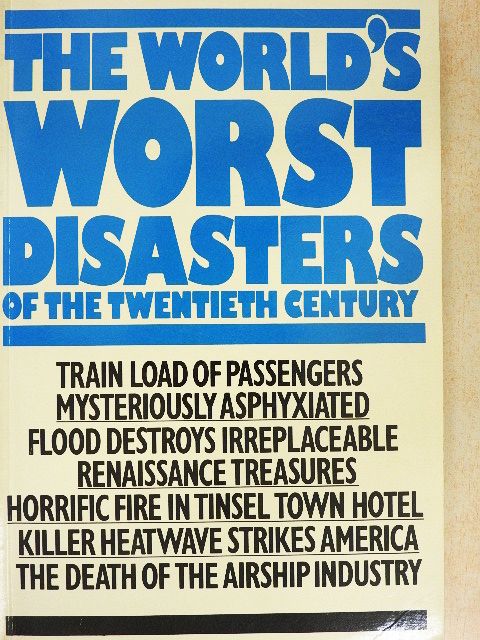
Cím: The World's Worst Disasters of the Twentieth Century [antikvár]
Kiadó: Octopus Books Limited
Kötés: Ragasztott papírkötés
ISBN: 0706421469
Méret: 150 mm x 210 mm
Új vásárló vagyok!
új vásárlóval indíthatsz rendelést............