


kategória
szerző
cím
sorozat
betöltés...
kiadó
betöltés...
ISBN
évszám
ár
-
leírás
Előrendelhető
A mezők bármelyike illeszkedjen
A mezők mind illeszkedjen



PREFACE
Anti-Semitism means six million Jews on Hitler's list but only twelve hundred Jews on Schindler's Ust. This book is about anti-Semitism, not, however, in its latest European obscenity, but in its earUest Christian latency. It is about the historicity of the passion narratives, those terribly well-known stories about Jesus' arrest and trial, abuse and crucifixion, burial and resurrection. It is about the accuracy and honesty of Christian scholarship in its best reconstruction of those ancient yet ever-present events. Bibhcal exegesis...
online ár:
Webáruházunkban a termékek mellett feltüntetett fekete színű online ár csak internetes megrendelés esetén érvényes.
4980 Ft

Részletesen erről a termékről
Bővebb ismertető
PREFACE
Anti-Semitism means six million Jews on Hitler's list but only twelve hundred Jews on Schindler's Ust. This book is about anti-Semitism, not, however, in its latest European obscenity, but in its earUest Christian latency. It is about the historicity of the passion narratives, those terribly well-known stories about Jesus' arrest and trial, abuse and crucifixion, burial and resurrection. It is about the accuracy and honesty of Christian scholarship in its best reconstruction of those ancient yet ever-present events. Bibhcal exegesis and historical analysis may often seem but distant murmurs from an ivory tower. Why should ordinary people care about discussions and debates among scholars? Two examples, one very small and one very large, indicate why the historicity of the passion narratives is not a question just for scholars and experts but for anyone with a heart and a conscience.
In the gospel of Mark, Jesus is tried by both a Jewish and a Roman tribunal, and each juridical process concludes with physical abuse and mockery. After the Jewish trial in Mark 14:65, "some began to spit on him," mocking him as a pseudo-prophet. After the Roman trial in Mark 15:19, "the soldiers . . . spat upon him," mocking him as a pseudo-king. If you are being scourged and crucified, being spat upon or even slapped may seem a very minor indignity and hardly worth consideration then or now. But, as Father Raymond E. Brown, S.S., notes in his recently published The Death of the Messiah: From Gethsemane to the Grave—A Commentary on the Passion Narratives in the Four Gospels, those mockeries were recalled by "the Passiontide ceremony in the çth-iith cents, in which a Jew was brought into the cathedral of Toulouse to be given a symboHc blow by the count—an honor!" (575 note 7). No Roman, one notices, was accorded a Uke honor.
Brown insists that his "commentary will not ignore the ways in which guilt and punishment for the crucifixion of Jesus have been inflicted on Jews by Christians, not the least in our own times" (7). Yet, despite that statement and a long section on anti-Judaism (383-97)> the best
Termékadatok
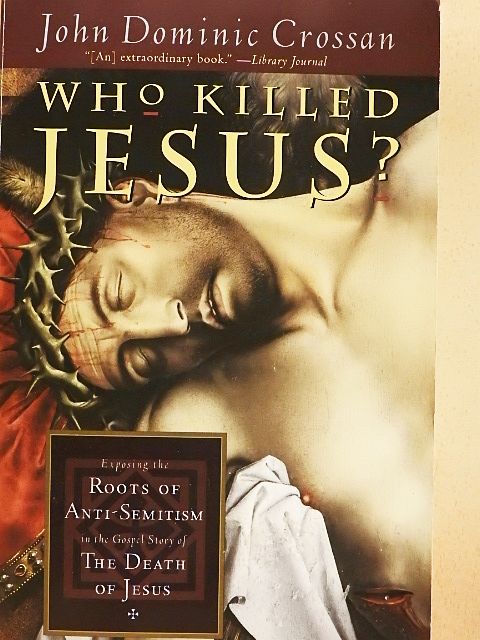
Cím: Who Killed Jesus? [antikvár]
Szerző:
John Dominic Crossan
Kiadó: HarperSanFrancisco
Kötés: Ragasztott papírkötés
ISBN: 0060614803
Méret: 140 mm x 210 mm
Új vásárló vagyok!
új vásárlóval indíthatsz rendelést............